Best BTC Miner Machine Guide: Compare Avalon BTC Miner, BTC Miner Calculator, and Bitcoin Mining Software Online
Best BTC Miner Machine Guide.
BTC mining machines play a critical role as the core component of the Bitcoin network, responsible for maintaining network stability and ensuring system security. Without mining machines participating in the work, transactions cannot be confirmed and new coins cannot be generated. By performing complex mathematical computations to verify transactions and adding confirmed blocks to the blockchain, mining machines ensure network security while maintaining transparency. They prevent fraudulent activities such as “double-spending” issues. Additionally, they generate new coins through block rewards, with transaction fees serving as another revenue source, thereby supporting decentralized issuance. Modern mining machines, such as ASIC miners, demonstrate high performance with powerful computing capabilities while maintaining high efficiency. This makes mining more reliable and enhances its market competitiveness.
Main Categories of BTC Mining Machines
CPU Miners
This was an early Bitcoin mining method.
It used standard computer processors for calculations.
The computing power was relatively low.
This method is now largely obsolete.
GPU Miners
Utilizes graphics cards for mining.
Graphics cards have powerful parallel computing capabilities.
Suitable for mining various cryptocurrencies.
Offers relatively high flexibility.
FPGA Miners
Uses programmable logic devices.
Energy consumption is relatively low.
Performance surpasses GPU miners.
Requires professional configuration.
ASIC Miners
Specifically designed for Bitcoin mining.
Employs dedicated chips.
Computing power is extremely high.
Energy consumption is very low.
This is the current mainstream mining machine type.
Well-known brands include Antminer.
Also includes Avalon Miner and others.
Bitcoin Mining Profit Calculator Guide
Step 1: Select Platform
You need to choose a calculator platform.
This platform should be industry-standard.
It must also be reliable.
Step 2: Enter Parameters
Open the selected calculator.
Then input your Bitcoin miner’s specific data.
Step 3: Load Data
The system will automatically load necessary network data.
Step 4: Execute Calculation
Click the calculate button to begin analysis.
The calculator will process immediately.
Results will show daily income figures.
Also display monthly income projections.
Include annual revenue forecasts.
You can see net profit after electricity costs.
It will also show break-even period.
And provide ROI analysis.
Step 5: Analyze and Compare
You can adjust various parameters.
Compare multiple data sets.
Conduct in-depth analysis work.
You can modify hash rate values.
Also adjust electricity cost standards.
Or test different Bitcoin prices.
Use these operations to compare profitability of different miners.
Here are some of the more practical Bitcoin mining software options:
CGMiner、BFGMiner、CudoMiner、Awesome Miner、EasyMiner
What Is a BTC Miner and How Does It Work?
A BTC miner is a specialized machine that performs complex computations to verify Bitcoin transactions and secure the blockchain, earning new Bitcoin as a reward for maintaining network integrity.
The mining process of a Bitcoin mining machine is essentially a sophisticated competition centered around “computing-verifying-recording.” Its core procedure can be summarized in the following three steps:
- Hash Calculation
The core task of a mining machine is hash calculation.
It must complete massive computational tasks.
It solves a cryptographic puzzle through continuous attempts.
This puzzle is extremely complex.
The calculation process consumes enormous resources.
The goal is to find a specific hash value.
This value must meet the network’s current difficulty requirement.
The first miner to find it wins the recording rights. - Block Reward
Miners who successfully solve the puzzle receive rewards.
They earn the right to create new blocks.
They are responsible for packaging verified transactions.
These transactions are placed into new blocks.
The new blocks are added to the existing blockchain.
The system issues new Bitcoin as rewards.
They also receive transaction fees.
This is the compensation for their work. - Network Validation
Newly generated blocks are immediately broadcast.
They are sent to all network nodes worldwide.
Each node independently verifies them.
It checks all transactions in the block.
Ensuring compliance with rules and legal validity.
The entire network must reach consensus.
Only then is the block formally accepted.
It becomes a permanent part of the blockchain.
This record is immutable.
Overview of Popular BTC Miner Machines in 2025
Avalon BTC Miner: Features, Performance, and Power Efficiency
Canaan (Jianan Technology) is a well-known Chinese blockchain hardware manufacturer. The company is renowned for its Avalon series of dedicated mining machines. It has long provided equipment to professional miners and mining farms. These devices are recognized for their stability and high efficiency.
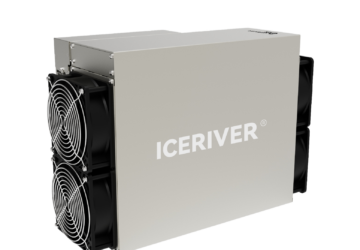
The Avalon BTC miner A1366 is a representative product. Its typical hash rate is approximately 130 TH/s. Power consumption is about 3250 W. The energy efficiency ratio is around 25 J/TH. Actual values may vary with firmware and operating conditions. It supports standard 220-240V power supply. The unit also features centralized management capabilities.
The A1366 is more suitable for medium to large-scale deployments. Its high computing power helps increase block discovery probability. However, its relatively high energy consumption requires attention. It needs low electricity cost environments to operate economically. This ensures a relatively short investment return period.
Compared with similar high-end equipment, the A1366 remains competitive in stability. Maintenance convenience is another advantage. But in scenarios sensitive to unit energy costs, careful calculation of long-term electricity expenses is essential. Cooling costs must also be considered. Procurement decisions should be based on comprehensive analysis of these data.
Comparing BTC Miner Machines: What to Look For
When comparing the best BTC miner machine from different brands, it is recommended to focus on the following core parameters:
. Hash Rate
A higher hash rate means faster block mining speed, leading to greater theoretical revenue.
. Power Consumption Performance
Lower power consumption results in better energy efficiency, which helps reduce operating costs.
. Total Cost
Consider the equipment procurement cost, which includes installation and cooling expenses, as well as daily operational expenditures. This represents a combination of one-time investment and ongoing costs.
. Operational Stability
Pay attention to the equipment’s continuous operation capability, where heat dissipation design is particularly critical. The quality of brand after-sales service is important, and firmware update support also affects stability.
. Example Comparison
One brand’s mining machine has a hash rate of approximately 127 TH/s, power consumption of 3276 W, and an energy efficiency ratio of about 26 J/TH. Another device has a relatively lower hash rate but consumes less power and has lower costs, making it suitable for regions with high electricity prices and space-constrained environments.
User Purchase Guide
- Focus on ROI
Always pay attention to the return on investment.
Calculate the initial equipment cost.
Include ongoing electricity expenses.
Add regular maintenance costs.
Compare these total investments with expected earnings. - Watch Electricity Costs
Electricity price is a crucial factor.
High power costs will significantly reduce your profit margin. - Match Mining Environment
First, identify your mining scenario:
Home, office, or professional mining farm?
Choose equipment based on your specific situation.
Consider the available cooling conditions.
Ensure compatibility with your power supply capacity. - Ensure Stable Operation
Equipment must maintain stable operation.
Frequent downtime directly affects earnings.
Prevent fan failures proactively.
Inadequate heat dissipation causes problems.
These issues increase maintenance costs.
Prioritize brands with good reputations.
Verify the equipment comes with comprehensive warranty service.
Using a BTC Miner Calculator to Estimate Profitability
A Bitcoin miner calculator is a professional online analysis tool that helps users accurately estimate mining profitability, electricity costs, and return on investment (ROI) by inputting miner parameters such as hash rate and power consumption, along with real-time network data.
Its standard usage process includes the following five key steps:
- Platform Selection
First, choose a professional calculation website. NiceHash is a recommended platform, and CryptoCompare is also a reliable option. These are reputable professional tools. - Parameter Input
Several key data points need to be prepared. These include the miner’s hash rate value, power consumption data, local electricity costs, and mining pool fees. - Data Loading
The system automatically retrieves real-time data, including the current Bitcoin price and network difficulty information. All of these will be automatically populated for calculation. - Execute Calculation
Click the calculation button to start the analysis. The system will provide daily profit projections, display monthly earnings estimates, and show annual profit analysis, including net profit calculations and return on investment (ROI) evaluation. - Scenario Simulation
Key parameters can be adjusted, such as changing the miner model or modifying electricity cost standards. By comparing multiple solutions, the optimal configuration can be screened to identify the most profitable solution.
Practical Value: This tool helps with quantitative evaluation, scientifically predicts the payback period, supports making wiser decisions, and makes investment risks more manageable.
Recommended Bitcoin Mining Software for BTC Miners
The following is a brief overview of three mainstream Bitcoin mining software programs in terms of compatibility, configuration recommendations, features, and user-friendliness:
- CGMiner
Compatibility: Supports Windows, Linux and macOS operating systems, and is compatible with ASIC, GPU and FPGA hardware.
Configuration Recommendations: Command-line interface is recommended for configuration and operation, suitable for experienced miners.
Features: Includes fan control, frequency adjustment, temperature monitoring, and multi-mining pool support.
User-friendliness: Beginners may need a considerable learning curve and encounter some pitfalls before mastering the features; experienced miners, however, benefit from greater flexibility and control. - BFGMiner
Features: Provides detailed hardware monitoring, remote interface functionality, modular design, and dynamic clock adjustment.
Compatibility: Supports Windows, Linux, and macOS operating systems, and is suitable for ASIC and FPGA hardware.
User-friendliness: Due to its modular design and advanced features, a certain level of technical background may be required to fully realize its potential.
Configuration Recommendations: Supports dynamic clock adjustment and remote monitoring, suitable for miners requiring high customization. - NiceHash
Compatibility: Supports Windows and Linux operating systems, compatible with ASIC, GPU, and CPU hardware.
Configuration Recommendations: Ideal for mining beginners, it offers a highly automated mining experience. The platform is designed to save effort for users seeking to simplify operational processes.
Features: Provides a mining marketplace, intelligent algorithm switching, and automatic optimization. Users can easily lease idle computing power or directly purchase required hash power to start mining immediately.
User-Friendliness: Features an intuitively designed interface with straightforward operational workflows, enabling users without technical backgrounds to get started quickly.
Tips to Optimize Your BTC Miner Setup
Here are techniques for optimizing BTC miner setup in the following three aspects:
1.Heat Dissipation & Power Management
Maintain adequate airflow around mining devices and avoid high-temperature environments.
Install efficient heatsinks or fans to enhance air circulation.
Configure stable power supply to prevent equipment damage from voltage fluctuations.
Deploy UPS or voltage stabilizers to ensure equipment safety during unexpected power outages.
2.Firmware Updates & Software Tuning
Regularly check official firmware updates to improve efficiency and stability.
Adjust operational parameters (frequency/voltage) to enhance hash rate while maintaining stability.
Utilize official or reliable third-party mining pool software for power-performance optimization.
3.Hash Rate Monitoring & Troubleshooting
Verify daily whether actual hash rates match specifications, addressing anomalies promptly.
Implement alert systems to monitor temperature, voltage, and computing power fluctuations.
Conduct regular dust removal and connection checks to prevent hardware-related downtime.
These techniques can effectively improve BTC mining machine stability and profitability while extending equipment lifespan.
Final Thoughts: Choosing the Best BTC Miner for You
Different models of Bitcoin miners have different strengths.
Each model suits a specific mining scenario.
High-hash-rate machines, such as the Avalon A1366, offer strong block-mining performance.
However, they usually have higher power consumption and purchase costs.
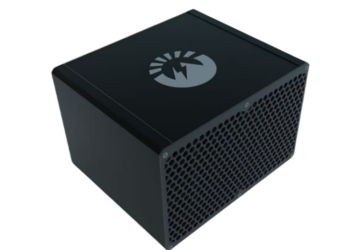
Low-power or home-use devices, like the Avalon Nano 3S, need a smaller initial investment.
They also run quietly with low noise levels.
But their limited hash rate can result in longer payback periods.
Using a professional Bitcoin miner calculator helps users estimate profits more accurately.
It calculates potential earnings and payback time based on hash rate, power use, electricity cost, and network difficulty.
This allows for a clear, data-based comparison of each miner’s cost-effectiveness.
Miners should consider their budget, hash rate needs, and local electricity prices.
Choosing the right mining setup helps maximize profits and reduce risks.
FAQ
. What is the best BTC miner machine for beginners?
The Avalon Nano 3S is made by Canaan Technology.
It is a great choice for beginners in Bitcoin mining.
The device offers about 6 TH/s of hash rate.
It uses only 140W of power.
Noise levels stay between 33–40 dB.
It weighs less than 1 kg.
These features make it ideal for home or small-space use.
Its simple interface helps newcomers start mining easily.
. How much can I earn with a BTC miner calculator?
The actual profitability using a BTC Mining Calculator depends on several factors: the miner’s hash rate, power consumption and electricity cost, Bitcoin price, network difficulty, and pool fees. When using the calculator, you simply enter the miner model (e.g., Avalon A1366), power consumption, electricity cost, and pool fees, and the system automatically calculates estimated daily, monthly, and yearly revenue, net profit after electricity costs, and return on investment based on current Bitcoin network data.
. Is Avalon BTC miner good for home mining?
The Avalon BTC miner, especially the Avalon Nano 3S, is ideal for home mining, offering approximately 6 TH/s hash rate, only 140W power consumption, noise levels as low as 33–40 dB, and weighing less than 1 kg, making it perfect for home or small-space use.